Why Does My Dog Lick Me So Much? Causes and When Licking Is a Problem
Dogs lick for affection, attention, taste, habit or stress. Learn what each cause looks like, how to cut it back, and when to call your vet.
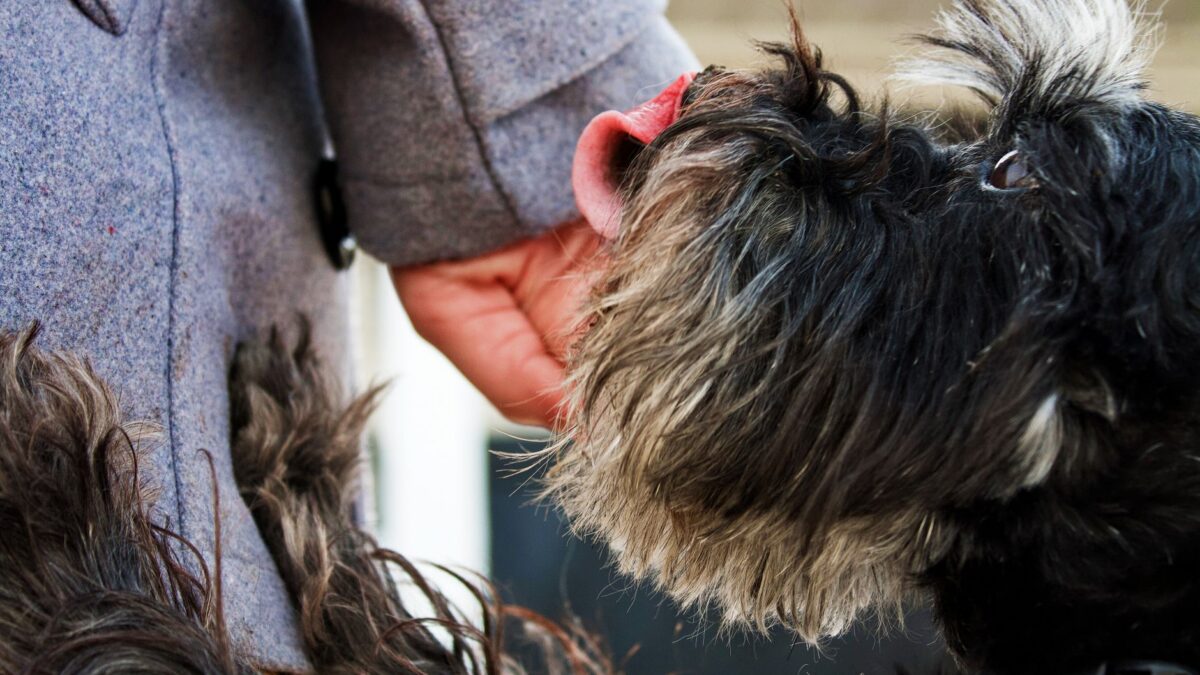
Most dogs lick their owners because licking is natural, social behaviour: it can show affection, ask for attention, explore a taste or simply soothe the dog. Occasional licking is normal. It becomes a problem when it is constant, hard to interrupt, aimed at one spot on your body or on themselves, or when it starts suddenly. Then it is worth looking at stress, boredom or a medical cause.
Common reasons dogs lick people
Affection and greeting
Licking is part of how puppies interact with their mothers and with each other, and many dogs carry that habit into adulthood. A dog who licks your hands or face when you come home, while wiggling and relaxed, is usually greeting you.
Attention
If licking gets a response, whether that is a laugh, a pat or even a scolding, the dog learns that it works. Dogs repeat what reliably earns attention, so a lick that leads to eye contact can become a habit.
Taste
Skin can taste salty after exercise, and hands may smell of food, lotion or other pets. Dogs explore the world with their mouths and noses, so an interesting taste can keep them licking.
Comfort and stress
Licking can release calming chemicals in a dog’s brain, so some dogs lick to settle themselves. If the licking is intense, rhythmic and increases when the dog is anxious, bored or left alone, it may be a self-soothing habit.
Wanting something
Some dogs lick to ask for food, a walk or a door to be opened. Notice what usually happens next. If the lick always comes before dinner or a trip outside, it is probably a request.
Is licking a sign of a problem?
Look at the pattern, not just the amount. Licking is more likely to be a concern when:
- it is new or has suddenly increased;
- the dog is licking the floor, furniture, air or their own paws or skin compulsively;
- you cannot easily distract the dog from it;
- it comes with scratching, redness, hair loss, drooling, vomiting, changes in appetite or low energy.
Excessive licking of surfaces or of the dog’s own body can be linked to skin problems, allergies, pain, stomach upset or anxiety. Only a veterinarian can tell which. If the change is sudden or comes with other symptoms, book a check-up rather than guessing. In an emergency, such as licking after exposure to a possible poison, contact an emergency vet or the ASPCA Animal Poison Control Center straight away.
Hygiene and safety for people
Dog saliva carries bacteria. For most healthy adults, a lick on intact skin is low risk, but licks on the mouth, eyes, nose or broken skin are best avoided. Take extra care around babies, older adults, pregnant people and anyone with a weak immune system. Wash your hands after petting or being licked, and wash any scratches or cuts straight away. Do not let a dog lick wounds, and keep medicated creams and lotions out of reach, since some are unsafe for dogs to swallow.
How to reduce licking you do not want
- Stop rewarding it. Do not speak, laugh or push the dog away with excitement. Calmly stand up or turn away for a few seconds.
- Teach an alternative. Ask for a sit or a “go to your mat”, then reward the dog with a treat or praise when they do it.
- Meet exercise and mental needs. A bored dog finds ways to entertain itself. Check that your dog gets enough activity, using our guide to how much exercise a dog needs, and add puzzle feeders, sniffing walks or short training sessions.
- Offer a chew. A safe chew or lick mat gives licking an acceptable outlet.
- Be consistent. Everyone in the household must respond the same way, or the dog will keep trying.
- Avoid punishment. Shouting or physical corrections can increase stress, which can make anxious licking worse.
If the licking is driven by anxiety or is compulsive, a veterinarian can rule out medical causes and may refer you to a qualified behaviourist. Pulling on the lead is a different habit with its own fixes, but the same idea applies: see why dogs pull on the leash for how to work out the cause before choosing a solution. Another odd habit, eating grass, is covered in why dogs eat grass.
When to call the vet
Contact your veterinarian if licking is excessive or compulsive, if it appears suddenly, if the dog is also licking paws until the skin is red or sore, or if you notice other changes in eating, drinking, toileting or behaviour. Do not try to treat the cause yourself with human medicines or creams.
Quick answers
Is it true that dog licks are kisses?
Sometimes. Licking can be a friendly, social signal, but it can also mean a dog wants something, likes the taste of your skin or is calming itself. Look at the dog’s whole body language.
Why does my dog lick me after a shower?
Your skin may carry the scent and taste of soap, lotion or water, and dogs are very interested in changes in how you smell. It is usually harmless.
Why does my dog lick the same spot on me?
A particular spot may taste salty or carry an interesting smell. If the dog is fixed on a wound, scar or rash, keep it covered and ask a doctor about it.
Should I let my dog lick my face?
It is a personal choice, but many health authorities advise avoiding licks around the mouth, nose and eyes. Wash your face and hands afterwards, especially if you are in a higher-risk group.