Camping With a Dog: Packing Checklist, Campground Rules and Safety Tips
Check the pet rules, pack your dog's own gear and plan for heat, ticks, wildlife and lake water. Then keep your dog leashed, supervised and close.
Camping with a dog goes best when you check the campground’s pet rules first, pack your dog’s own gear (leash, ID, food, water, bowls, bedding, waste bags and a first aid kit), and plan around the main outdoor risks: heat, ticks, wildlife and unsafe water. Many US campgrounds require dogs to be on a leash no longer than six feet, and you should never leave your dog unattended at the site.
Below is a practical packing checklist, the rules you are likely to meet, and the safety points worth thinking about before you go.
Before you book
- Check that dogs are allowed. Rules vary widely. In US national parks, pets are usually welcome in developed areas and many campgrounds, but are often not allowed on most trails or in the backcountry. The National Park Service pets page links to individual park rules.
- Read the leash rule. National parks and developed national forest campgrounds generally require pets to be on a leash no longer than six feet, or otherwise physically restrained. State parks and private campgrounds set their own rules.
- Ask about limits on the number of pets per site, breed restrictions at private sites, and whether dogs may be left in tents or vehicles (often not).
- Consider your dog. A dog that is anxious around strangers, reactive to other dogs or new to long car rides may find a busy campground stressful. A short trial overnight close to home is a good test.
- Check vaccinations and parasite prevention with your vet before the trip, especially if you are traveling to an area with different ticks, mosquitoes or wildlife.
Packing checklist
| Category | What to pack |
|---|---|
| ID and paperwork | Collar with ID tag, up-to-date microchip registration, vaccination records (proof of rabies vaccination is often required), a recent photo of your dog |
| Leash and restraint | Standard leash (6 ft or shorter), spare leash, well-fitted harness, tie-out cable or stake for short supervised use |
| Food and water | Usual food plus extra, treats, collapsible bowls, plenty of drinking water or a way to treat water |
| Sleeping | Dog bed, mat or blanket; a crate if your dog uses one; a dog jacket for cold nights if needed |
| Clean-up | Waste bags, a sealed container for used bags, towel, wipes |
| Health and safety | Pet first aid kit, any regular medications, tick remover, your vet’s details and the nearest emergency clinic |
| Comfort | Familiar toy, long-lasting chew, shade option for the campsite, light-up collar or clip-on light for night |
Our pet first aid kit checklist explains what to put in the kit, and traveling with a dog in the US covers car safety on the way there.
At the campsite
- Walk the site first. Look for broken glass, food scraps, fire pits, steep drops and nearby water.
- Set up shade and water before anything else on a warm day.
- Keep your dog leashed or tethered while you set up. A tie-out should only be used when you are right there, and never near the fire or where your dog could tangle.
- Keep the dog away from the campfire, hot grills and cooking areas.
- Store dog food like human food. In bear country, follow the campground’s food storage rules, which usually means a bear box or a locked vehicle, not the tent.
- Manage barking. Campgrounds have quiet hours, and constant barking can get you asked to leave. Plenty of exercise, a chew and a familiar bed help.
- Never leave your dog alone at the site, in the tent or in a car. Temperatures can rise quickly, and a lone dog may bark, escape or meet wildlife.
Safety outdoors
Heat
Dogs overheat more easily than people, especially flat-faced breeds, older dogs, overweight dogs and dogs with thick coats. Hike in the cooler parts of the day, carry water, take breaks in shade and watch for heavy panting, drooling, weakness or stumbling. See how to keep dogs cool in hot weather for the signs of heatstroke.
Ticks
The CDC recommends checking pets for ticks every day, especially after time outdoors, and removing them promptly. Look in and around the ears, around the eyes, under the collar, under the legs, between the toes and around the tail. Signs of tick-borne illness can take one to three weeks or more to appear, so keep watching after you get home. Use a tick preventive your vet recommends; our flea and tick prevention guide explains the options.
Water
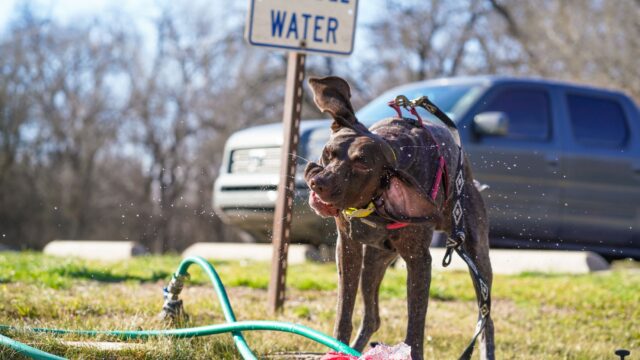
- Bring drinking water rather than letting your dog drink from lakes, streams or puddles, which can carry parasites and bacteria.
- Avoid water with a scum, foam, mat or unusual color. Harmful algal blooms produce toxins that can make dogs very sick or be fatal. Look for posted advisories and rinse your dog with clean water if they’ve been in a lake.
- Consider a dog life jacket for boating, fast rivers or dogs that are not strong swimmers.
Wildlife and plants
- Keep your dog close. A leash protects wildlife and keeps your dog away from snakes, porcupines, skunks and larger animals.
- Don’t let your dog chase or approach wildlife, and keep them away from carcasses and droppings.
- Watch what your dog eats. Wild mushrooms, berries and plants can be toxic.
- Check paws and coat each evening for burrs, foxtails, cuts and thorns.
Leave no trace with a dog
- Pick up all dog waste. Pack it out in a sealed bag, or bury it only where the land manager allows, well away from water, trails and camps.
- Stay on the trail and keep your dog leashed to protect plants, nesting birds and other wildlife.
- Keep noise down so other campers and wildlife are not disturbed.
- Leave no food or bowls out overnight, as they attract animals.
Many national parks run a B.A.R.K. Ranger program that sums this up: Bag your pet’s waste, Always leash your pet, Respect wildlife, and Know where you can go.
When to see a vet
Contact a veterinarian or emergency clinic right away if your dog has signs of heatstroke, collapses, has trouble breathing, vomits repeatedly after drinking from a lake or pond, is bitten by a snake or wild animal, eats a mushroom or unknown plant, or has a deep cut or a paw injury they won’t put weight on. Note the nearest emergency vet before you go, since many campsites have poor phone coverage.
Bottom line
Check the pet rules, pack your dog’s ID, leash, food, water, bedding, waste bags and first aid kit, and plan for heat, ticks, wildlife and unsafe water. Keep your dog leashed and supervised at all times, clean up after them, and know where the nearest vet is. A short practice trip is the easiest way to see whether your dog enjoys camping.
FAQ
Can my dog sleep in the tent with me?
Yes, at most campgrounds that allow dogs. Many owners find it safer than leaving a dog outside overnight. Bring a mat or bed so your dog stays warm and off the cold ground.
Are dogs allowed on national park trails?
Usually only on a small number of trails. Pets are more often allowed in campgrounds, developed areas and paved paths. Check the specific park’s pet page before you go.
Do I need vaccination records for camping?
Some campgrounds ask for proof of rabies vaccination, and it is useful to have if your dog bites someone or needs a vet away from home. Keep a copy on your phone.
Can my dog drink from streams?
It is safer not to. Streams and lakes can carry parasites, bacteria and, in some conditions, algal toxins. Carry enough clean water for your dog.