How to Stop a Dog From Barking at Other Dogs on Walks
Barking at other dogs on walks usually comes from fear, frustration or excitement. Learn how distance, treats and calm routines reduce it step by step.
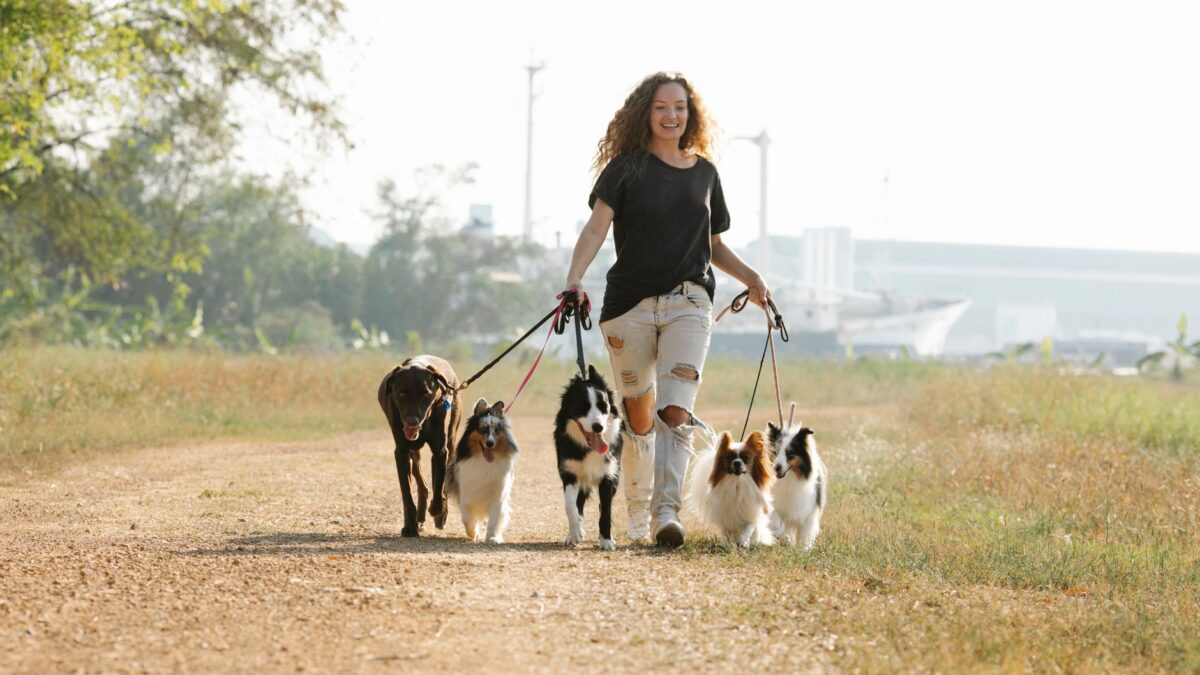
A dog that barks at other dogs on walks is usually reacting to fear, frustration or overexcitement, and the fix is to teach the dog that other dogs appearing means good things happen at a comfortable distance. Punishment and yanking the leash tend to make the barking worse. Most dogs improve with a mix of distance, small tasty rewards and short, repeated practice sessions.
The steps below work for ordinary leash barking. A dog that lunges hard, bites or has been in fights should be seen by a veterinarian and a qualified trainer or behaviorist before you try this alone.
Why does my dog bark at other dogs on walks?
Dogs bark at each other for different reasons, and the right approach depends on which one applies to yours.
- Fear: the dog wants the other dog to go away and barks to make that happen. Fearful dogs often stiffen, lean back or tuck the tail.
- Frustration: the dog wants to greet but the leash stops it. The body is usually loose and wiggly, and the barking gets louder as the other dog gets closer.
- Overexcitement: the dog has learned that other dogs mean play and cannot hold back.
- Guarding: some dogs bark to keep others away from the owner or a space.
The leash adds to the problem. A dog on a leash cannot move away or approach freely, so barking becomes the only tool it has. Many dogs that are relaxed off leash still bark when clipped in. If the barking started suddenly or the dog seems to be in pain, check with your veterinarian first, since discomfort can make dogs short-tempered.
What should I do the moment my dog starts barking?
Calmly turn and walk away to create more space. Do not shout, jerk the leash or hold a tight line, because tension on the leash can raise your dog’s arousal and teach it that other dogs are linked to unpleasant feelings.
Put some distance between your dog and the other dog, then reward your dog once it settles and looks at you. Crossing the street, stepping between parked cars or turning down a side road all work. Leaving is not failure. It gives your dog a way out so it does not need to bark.
How does the distance method work?
Find the distance at which your dog notices another dog but stays calm enough to take a treat. This is often called the threshold. Training happens just outside it.
- Pick small, soft, high-value treats such as tiny pieces of cooked chicken or cheese. Dry biscuits usually will not compete with the excitement of a dog nearby.
- When your dog sees another dog at a calm distance, say a marker word such as “yes” and give a treat right away.
- Keep treating while the other dog is in view. When the other dog disappears, the treats stop.
- Over several sessions, move a little closer only when your dog stays relaxed, with a soft face and loose body.
- If your dog starts barking, you went too close. Increase the distance and make the next step smaller.
The aim is a changed emotion. The dog should begin to look at you with a happy expression when another dog shows up, because that sight now predicts treats.
Which skills make walks easier?
A few simple behaviors give your dog something to do instead of barking. Practice each at home and in a quiet street before using it near other dogs.
- Look at me: reward your dog for turning its head to your face on cue or on its own.
- U-turn: say a cue, turn around and walk the other way while rewarding your dog for following.
- Sniff or find it: scatter a few treats on the ground so the dog’s nose is busy and its head is down.
- Sit and watch: a dog sitting at the side of the path while another dog passes is easier to keep calm than one pulling forward.
If your dog already barks at dogs on the other side of a window or fence, the same approach applies. For general background on reasons dogs bark and how to respond, see this guide to finding the cause of barking.
What equipment helps and what makes it worse?
A well-fitted harness with a flat, comfortable leash gives you control without putting pressure on your dog’s neck. A standard leash of about 4 to 6 feet (1.2 to 1.8 m) is easier to handle than a long retractable one, which can let a dog rush toward another dog before you react.
Choke, prong and shock collars are not recommended for this problem. They can cause pain at the exact moment the dog sees another dog, which can deepen fear and aggression. Muzzle training, done gradually with treats, is a reasonable safety tool for dogs with a bite history and is something a trainer can set up.
How can I make walks less stressful?
Small changes to routine reduce how often your dog practices barking.
- Walk at quieter times or on quieter routes while the training is in progress.
- Exercise your dog before the walk, since a tired, well-fed dog finds it easier to stay calm. Weather also matters, and our guide on how cold is too cold to walk a dog covers safe walk lengths.
- Stay relaxed yourself. Dogs read tension in the leash and in your breathing.
- Do not let strange dogs rush up to greet. Politely ask other owners to keep their distance, and tell them your dog is in training.
- Keep sessions short. Five to ten minutes of good practice beats a long walk full of barking.
Pent-up energy can also show up as sudden bursts of running and noise, covered in this explanation of dog zoomies.
When should I get professional help?
Call your veterinarian if the behavior is new, getting worse, or comes with signs such as limping, scratching or changes in appetite. The American Veterinary Medical Association (AVMA) is a good starting point for finding vet care information.
Look for a trainer who uses reward-based methods, or a veterinary behaviorist, if your dog lunges so hard you struggle to hold it, has bitten, or if training at home is not helping after several weeks. Progress is often slow and uneven, with good and bad days, and that is normal.
Quick answers
Should I let my dog meet the dogs it barks at?
Not while the barking continues. A tense greeting on a leash can go badly. Build calm behavior from a distance first, and arrange greetings only with a calm, known dog and a loose leash.
Will my dog grow out of barking at other dogs?
Rarely. Without training, dogs often get better at barking because it works: the other dog leaves. Consistent practice is what changes the habit.
Do treats teach a dog to bark for food?
Not if the treat is given when the other dog appears and before the barking starts. The dog learns that seeing another dog predicts a reward, not that barking earns one.
Is barking at other dogs always aggression?
No. Frustrated greeting and fear are both common, and they look different from aggression. A trainer can read your dog’s body language in person and tell you which one you are dealing with.