Keep Cats Out of Houseplants and the Christmas Tree Safely
Cats leave plants and trees alone when you remove the reward, block access and give them better options. Safe fixes, risky plants and what to skip.
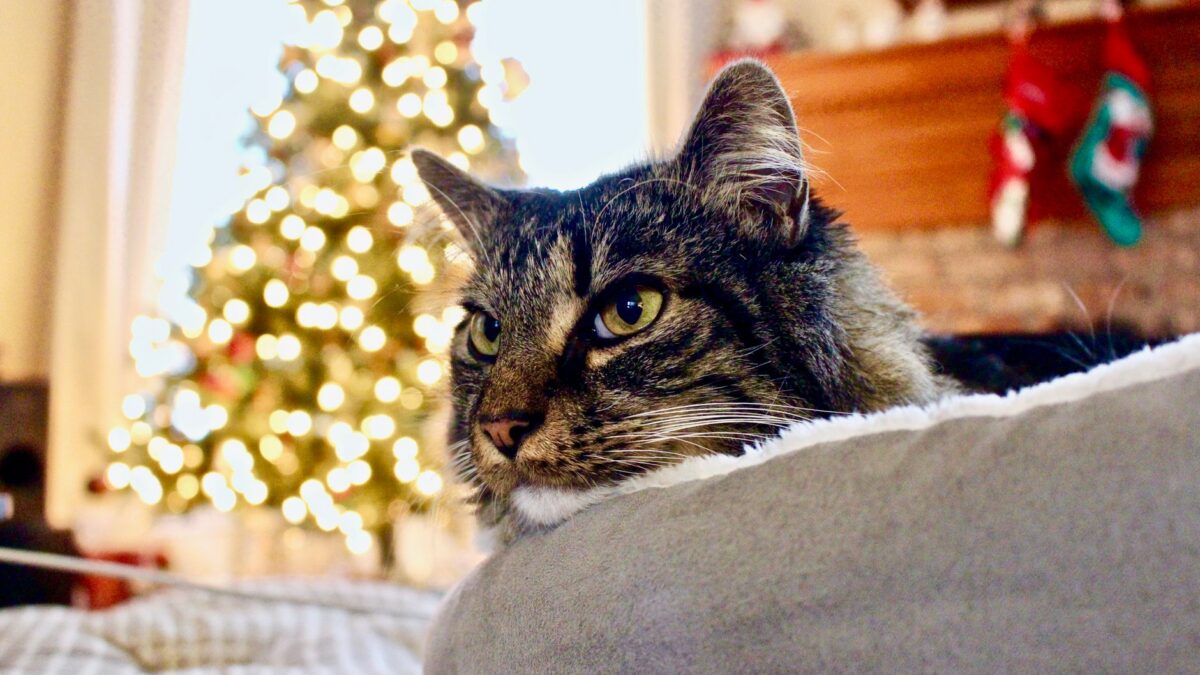
To keep a cat out of houseplants and the Christmas tree, make the plants and tree physically hard to use, make the spot unpleasant to land on, and give the cat something more interesting to chew and climb. Punishment does not work well, because cats do not link a scolding to something they did minutes ago. Removing dangerous plants entirely is the safest first step, since no deterrent is perfect.
The same few habits cover most households: a stable tree, a covered water bowl, no tinsel or ribbon, a short list of truly cat-safe plants, and a plan for what to do if the cat chews something it should not.
Why do cats go after plants and trees?
Cats are curious, they like to climb, and they like to chew greenery. Moving leaves and dangling ornaments trigger the hunting instinct. A tree also gives a cat height, which cats like. Boredom and a lack of safe things to chew make it worse, so the fix is partly about supply: if the plant is the most interesting thing in the room, it will get attention.
Which plants are dangerous for cats?
True lilies (Lilium) and daylilies (Hemerocallis) are among the most dangerous plants for cats, and even small amounts of any part, including pollen or vase water, can cause kidney failure. If a cat has touched a lily, call an emergency vet right away. Other plants that commonly cause trouble include sago palm, amaryllis, holly, mistletoe, pothos, philodendron and aloe. Poinsettia is usually less serious than its reputation suggests, but it can still upset the stomach; details are in this guide to holiday plants and their real risk to pets.
Check any plant you own against the ASPCA’s toxic and non-toxic plant lists, and keep dangerous ones out of the house if you have a cat that chews. Placing a plant “out of reach” rarely works, because cats jump and climb well.
How do you keep a cat out of houseplants?
- Move plants to a room the cat cannot enter, or to a hanging planter placed where the cat cannot jump to it from furniture.
- Cover the soil with large smooth stones, a plant-safe mesh or decorative pebbles so digging is no fun.
- Put double-sided sticky tape, aluminum foil or a plastic carpet runner (spiky side up) around the pot. Most cats dislike the feel under their paws.
- Offer cat grass or a pot of oat or wheat grass in another spot, so chewing has a safe outlet.
- Add a sturdy cat tree by the window, and rotate toys, so plants are not the best entertainment.
Skip essential oil sprays and homemade citrus oil mixes. Many essential oils are harmful to cats, and plain citrus peel placed near a pot is a gentler option for cats that dislike the smell.
How do you cat-proof a Christmas tree?
Start with stability. Anchor the tree to a wall or ceiling hook with fishing line, and use a heavy base. A tree that wobbles can fall on a cat or crash into the room when it jumps.
- Cover the tree stand water. Cats may drink from it, and fertilizers, preservatives or bacteria in standing water can upset the stomach.
- Skip tinsel, ribbon and string. Cats swallow these long, thin items, which can cause a serious intestinal blockage that needs emergency surgery.
- Hang breakable and small ornaments higher up, and use shatterproof ones on lower branches, or leave the lowest third of the tree bare.
- Tuck electric cords out of sight or run them through cord covers, and unplug lights when you are out. Chewed cords can cause burns or shocks.
- Keep needles swept up. Real fir and pine needles can irritate a cat’s mouth and stomach.
- Wrap the base or circle it with a pet gate or playpen if the cat is determined.
A smaller tabletop tree in a closed room, or an artificial tree with fewer dangling parts, can be an easier start for a curious cat. Gifts also bring risks, such as curling ribbon and small toys; see these safe holiday gifts for cats and dogs for ideas.
What if the cat chews something it should not?
Take the plant or object away, check the cat’s mouth for leftover pieces, and call your veterinarian or an emergency vet. In the US you can also call the ASPCA Animal Poison Control Center. Have the plant’s name, or a photo, and a rough idea of how much was eaten and when. Do not try to make the cat vomit unless a professional tells you to. Call at once for drooling, repeated vomiting, lethargy, tremors or trouble breathing, or if you suspect lily exposure.
Keep in mind that a cat that eats string or ribbon may show vomiting, loss of appetite or hiding. Do not pull a string that is hanging from the mouth or rear end; go straight to a vet.
Quick answers
Do citrus peels really keep cats away?
Many cats dislike the smell of citrus, so peels near a pot or at the base of the tree may put them off. It does not work on every cat, and it should not replace blocking access to dangerous plants.
Is a spray bottle a good deterrent?
It is not recommended. Squirting can scare a cat and damage trust without teaching it what to do instead. Redirecting to a scratching post, cat grass or a toy works better and is kinder.
Is a fake tree safer than a real one?
Each has risks. A real tree adds water, sap and needles; an artificial one can shed plastic bits and has a stable base. Whichever you choose, tinsel, cords and fragile ornaments matter more than the tree type. If your cat also spends time outdoors in winter, this guide on how cold is too cold for cats outside covers the temperature side.