How to Stop Puppy Biting: Bite Inhibition, Redirection, Calm Time-Outs and Teething
Why puppies nip, how they learn to control their bite, and a calm, step-by-step plan to swap hands and ankles for toys.
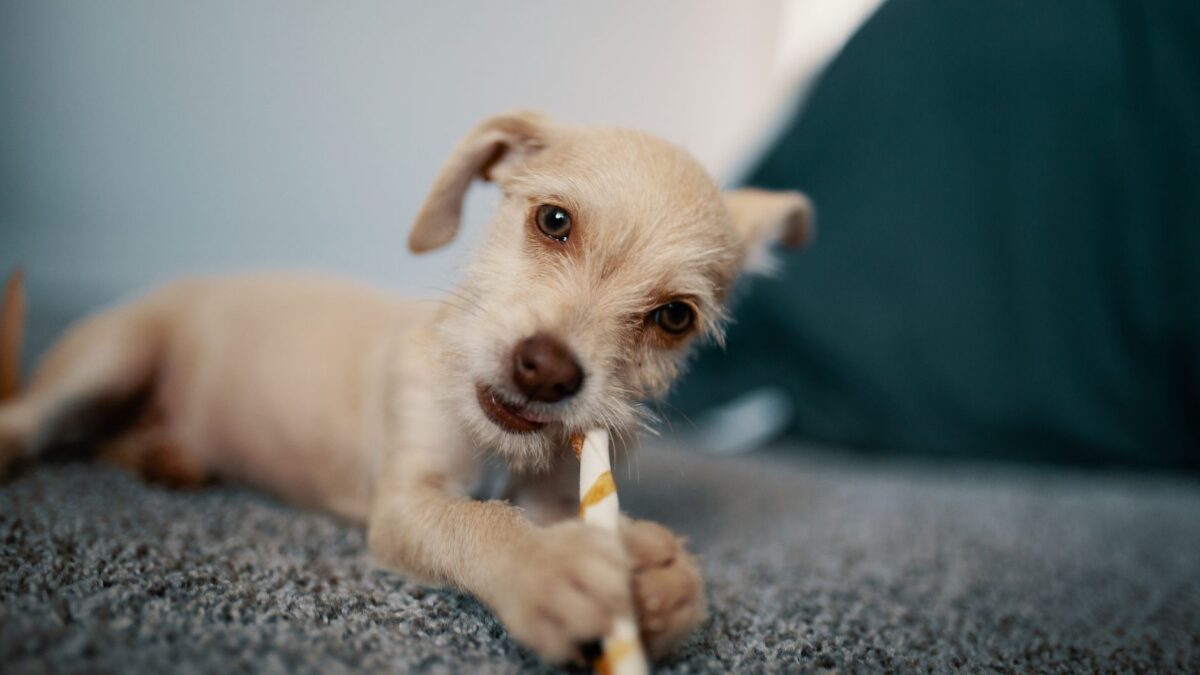
Puppy biting is normal play and exploration, not aggression. To reduce it, teach your puppy that teeth on skin ends the fun, redirect their mouth to chew toys, use short, calm time-outs when play gets too rough, and make sure they get enough sleep, exercise and safe things to chew, especially while teething. Never hit, shake or scruff a puppy.
Most puppies grow out of the worst nipping as they mature, but the habits you build now shape how gentle their mouth will be as an adult.
Why puppies bite
- Play: puppies wrestle and mouth each other constantly. Your hands and feet look like fun playmates.
- Exploration: mouths are how puppies investigate the world.
- Teething: sore gums make chewing feel good.
- Overtiredness or overexcitement: many “biting frenzies” happen when a puppy badly needs a nap.
- Seeking attention: if nipping gets a big reaction, it can become a way to start a game.
What bite inhibition means
Bite inhibition is a dog’s ability to control the force of their mouth. Puppies learn much of it from littermates: when one bites too hard, the other yelps and stops playing. According to the ASPCA, some behaviorists believe a dog who has learned a gentle mouth is less likely to cause serious injury if they ever bite out of fear or pain. That is why the goal is first a softer mouth, then no mouthing on people at all.
Step-by-step plan
- Keep toys within reach. Stash tug toys, soft rubber chews and plush toys around the house so you can always offer something better than your hand.
- React to hard bites. When teeth press too hard, say “ouch” in a short, high voice, let your hand go still and limp, and pause play. Some puppies get more excited by a yelp; if yours does, skip the sound and just go still.
- Praise when they let go or lick. Then resume gentle play.
- Use a brief time-out if needed. If nipping continues, calmly stand up and step away, or step behind a baby gate, for about 10 to 20 seconds. Then come back and play again more gently.
- Redirect before it starts. When you see your puppy winding up, offer a toy before the teeth land on you.
- Gradually raise the bar. Once hard bites are rare, respond the same way to softer ones, until your puppy learns that teeth on skin always stop the game.
- Reward calm. Drop a treat or praise quietly when your puppy is relaxed near your hands or lies chewing a toy.
Ankle biters
Puppies love to chase moving feet. If yours ambushes your ankles, stop walking and stand still, then offer a toy to tug on instead. Praise them for grabbing it. You can also carry a toy in your pocket and drag it along the floor to give them something better to chase.
Prevent overtired biting
Young puppies need a lot of sleep. Many owners notice nipping spikes at the same time each day, often in the evening. A predictable routine with naps in a crate or pen after play and training sessions can make a big difference. See our guide to crate training a puppy for how to set up a calm resting space.
Teething: what to expect
According to VCA Animal Hospitals, most puppies have started getting their adult teeth by about four months of age. Incisors usually come first, with canines and back teeth following over the next few months, and chewing can continue for several months after the adult teeth are in.
| Offer | Why it helps | Watch out for |
|---|---|---|
| Soft rubber puppy chews | Give gentle resistance for sore gums | Choose the right size so it cannot be swallowed |
| Food puzzle toys | Keep the mouth busy and provide mental work | Count food used toward daily intake |
| Rope or tug toys | Great for interactive play away from hands | Supervise; frayed strands can be swallowed |
| Plush toys | Comfort and gentle mouthing | Remove once torn open |
Avoid very hard items such as bones, antlers or hard nylon that do not bend, which can damage teeth. If you are unsure, ask your veterinarian which chews are suitable. Our guide to safe dog toys for heavy chewers explains what to look for.
Exercise, play and training
A puppy with no outlet for energy will find one, often with their teeth. Short training sessions, sniffing walks (within what your vet advises for their vaccination stage), fetch and tug with clear rules all help. Puppy classes give your puppy a chance to play with other healthy, vaccinated puppies and learn bite control from them.
What not to do
- Do not hit, flick, scruff-shake or pin your puppy. Physical punishment can make them fearful of hands and more likely to bite defensively later.
- Do not hold the mouth shut or push fingers down the throat.
- Do not wave hands or feet in their face to start rough play.
- Do not jerk your hand away quickly; that turns it into a chase toy.
- Do not stop playing with your puppy altogether. They need play to learn.
These recommendations follow the general position of the American Veterinary Society of Animal Behavior that reward-based training should be used for all dogs. Our article on positive reinforcement training basics explains why.
When to get help
Normal puppy mouthing is loose and wiggly. Talk to your veterinarian or a certified behavior professional if your puppy freezes, stiffens, growls with a hard stare, or bites when you touch their food, toys or body, or if biting is getting more intense instead of less after several weeks of consistent work. These signs need professional assessment rather than more home training.
Bottom line
Puppy biting is a phase you can shape. Respond calmly and consistently to teeth on skin, give your puppy plenty of better things to bite, protect nap time, and skip all forms of physical punishment. With patience, most puppies learn a gentle mouth and leave nipping behind.
FAQ
At what age do puppies stop biting?
It varies, but nipping usually eases as teething finishes and puppies mature, often somewhere between about four and seven months. Consistent training speeds it up.
Does yelping really work?
For many puppies, a short “ouch” and stillness signals that play got too rough. Some get more excited instead; for them, a calm pause or brief time-out works better.
Is my puppy aggressive?
Most puppy biting is play. Warning signs that need a professional opinion include stiff body language, guarding food or toys, and biting when handled.
Can I give ice cubes for teething?
Some owners offer frozen chew toys designed for puppies. Ask your vet before giving ice or frozen foods, as very hard items can be rough on young teeth.