How to Keep a Dog Off the Furniture: Teach “Off,” a Place Cue and Kind House Rules
Dogs choose the sofa because it is comfortable and rewarding. Make the floor better, teach two simple cues and block access when you are away.
The kindest and most reliable way to keep a dog off the furniture is to make the floor more rewarding than the sofa: give your dog a comfortable bed of its own, teach an “off” cue and a “place” cue with treats, and block access to the furniture while you are not there to supervise. Consistency matters more than anything else. If the couch is sometimes allowed and sometimes not, most dogs will keep trying.
Punishment, such as shouting, swatting or spraying, tends to teach a dog to avoid you rather than the sofa, and it can damage trust. Reward-based training gets the same result without the side effects.
Why dogs love the sofa
From a dog’s point of view, furniture is a great spot. It is soft, raised, warm, smells of the people it loves and often has a good view of the window. Jumping up is not a bid to “dominate” the household; it is simply a comfortable choice that has been rewarded in the past, often by a cuddle or simply by being comfortable.
That is useful to know, because it tells you what to do: offer a better comfortable spot, reward your dog for choosing it, and stop the sofa from paying off.
Decide the house rules first
Before you train, agree as a household on exactly what is allowed. Common options:
- Never on furniture. The simplest rule for a dog to learn.
- Only by invitation. The dog may come up when you say “up” and must get down on “off.” This works well for many dogs, but only once both cues are solid.
- Some furniture, not others. For example, an old armchair with a washable cover is fine, but the bed and the good sofa are not. Dogs can learn this, but it takes clear management at first.
Whatever you choose, everyone must follow it. One person allowing the dog up “just this once” undoes days of training.
Step 1: Give your dog a better spot
A dog that has nowhere comfortable to lie will look for somewhere. Put a good-quality bed or mat in the rooms where your family spends time, ideally near the sofa so your dog can still be close to you. Older dogs, large breeds and dogs with joint stiffness often appreciate a thicker, supportive bed. Our guide on how to choose a dog bed covers size, support and washable covers.
Make the bed worth using: drop a treat on it when your dog lies there, give chews only on the bed, and offer calm praise when you find your dog resting on it.
Step 2: Teach “off”
“Off” means “all four paws on the floor.” Teach it as a positive cue, not a scolding.
- Wait until your dog is on the sofa (or invite them up if they are already allowed).
- Toss a treat onto the floor a short distance away. As your dog jumps down to get it, say “off” just as their paws touch the floor, then praise.
- Repeat several times in short sessions over a few days.
- Say the cue first. Once your dog is reliably following the tossed treat, say “off,” pause for a second, then toss the treat. Most dogs start moving at the word.
- Fade the lure. Say “off,” wait for your dog to jump down, then reward from your hand or pocket. Over time, reward some repetitions with praise or a game instead of food.
Avoid pulling your dog off by the collar. Grabbing can make some dogs wary of being handled, and a dog that is tired or sore may react defensively.
Step 3: Teach a “place” or “go to bed” cue
“Off” tells your dog what to stop doing. A place cue tells them what to do instead, which is usually easier for a dog to understand.
- Stand next to the bed with treats. Toss one onto the bed. When your dog steps on, mark with “yes” and give another treat while they are on it.
- Wait for more. Gradually wait for your dog to put all four paws on the bed, then to sit or lie down on it, before rewarding.
- Add the cue. Say “place” just before you toss the treat. After several repetitions, say “place” and wait for your dog to go there on their own.
- Build distance and time. Send your dog from a step away, then from across the room. Reward calmly and often while they stay on the bed, then release them with a word such as “free.”
- Practice at real-life moments, such as when you sit down to watch TV.
Small, soft rewards work best for this sort of repetition. See our guide to training treats and the 10% rule so the treats do not add up to too many calories. If you are new to markers and timing, positive reinforcement training basics explains the method.
Step 4: Manage the furniture when you can’t supervise
Training only works if the sofa stops being a reward. When you are out or busy, prevent access so your dog cannot practice the habit:
- Close the door to rooms with off-limits furniture, or use a baby gate.
- Make it less inviting. Stand cushions on end, or place a laundry basket or a few dining chairs on the sofa.
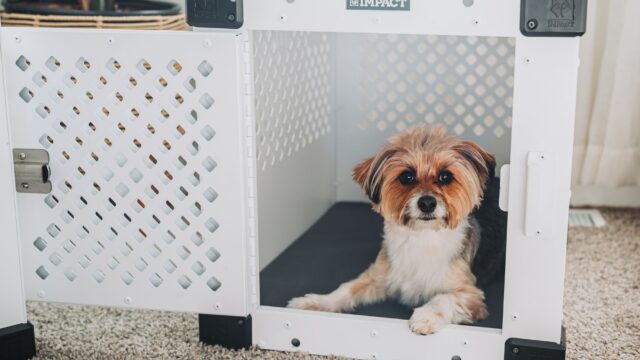
- Use a crate or pen for dogs that are comfortable with one, especially puppies and newly adopted dogs.
- Cover the furniture with a throw if your dog is allowed up by invitation, so at least the sofa stays clean.
Products marketed to give dogs a shock, a startling noise or a blast of air when they touch furniture are best avoided. They can create fear and anxiety, and your dog may link the scare to the room or to you.
Why punishment backfires
The American Veterinary Society of Animal Behavior states in its humane dog training position statement that reward-based methods should be used for all dog training, and that aversive methods are not necessary. Scolding a dog on the sofa usually teaches them to wait until you leave the room, or to feel anxious when you approach. Rewarding the floor and the bed teaches them where you want them to be.
Common problems and fixes
| Problem | Likely reason | What to try |
|---|---|---|
| Gets on the sofa as soon as you leave | The sofa still pays off when unsupervised | Block access with doors, gates or objects on the cushions |
| Ignores “off” | Cue not practiced enough, or the sofa is more rewarding than the treat | Go back to tossing a high-value treat; practice when your dog is calm |
| Jumps straight back up | Nothing better to do on the floor | Follow “off” with “place” and reward on the bed; offer a chew |
| Only one family member is obeyed | Mixed rules or cues | Agree on words and rules; everyone practices |
| Growls or snaps when asked to get off | Possible guarding, pain or fear | Stop asking directly; see below |
When to get professional help
If your dog growls, stiffens, snaps or bites when asked to move, or guards the sofa or your bed, do not try to remove them by force. Use a treat toss to lure them down safely, manage access to the furniture, and contact your veterinarian. Pain, such as sore joints, can make a dog reluctant to move, and guarding behavior is best handled with help from a veterinary behaviorist or a certified behavior consultant.
A sudden change, such as a dog that always jumped up but now struggles to, or a dog that suddenly refuses to come down, is also worth mentioning to your vet.
Bottom line
Keep a dog off the furniture by giving them a comfortable spot of their own, rewarding them for using it, teaching “off” and “place” with treats, and preventing access when you can’t supervise. Be consistent as a household and skip punishment. Most dogs get the idea within a few weeks of steady practice.
FAQ
Is it bad to let my dog on the couch?
Not necessarily. Many dogs share furniture with no problems. It becomes a problem if your dog guards the spot, struggles to jump safely, or the rest of the household doesn’t want it. Choose a rule and stick to it.
How long does it take to teach “off”?
It varies with the dog and how often you practice. Many dogs respond to the cue within days of short daily sessions, but reliability around distractions takes longer. Keep managing access until the habit is gone.
Can a dog learn “up only when invited”?
Yes, many can, once “off” and “place” are reliable. Teach “up” by patting the sofa and rewarding, and always pair it with practice of “off.”
Should I use furniture deterrent mats?
Avoid any product that delivers a shock or startles your dog. Simple barriers, such as gates or objects on the cushions, plus a better bed, work without the risk of making your dog fearful.