How to Choose a Cat Scratching Post: Height, Stability, Material
A good cat scratching post is tall enough for a full stretch, heavy enough not to wobble, and wrapped in sisal. Here is how to pick one and where to put it.
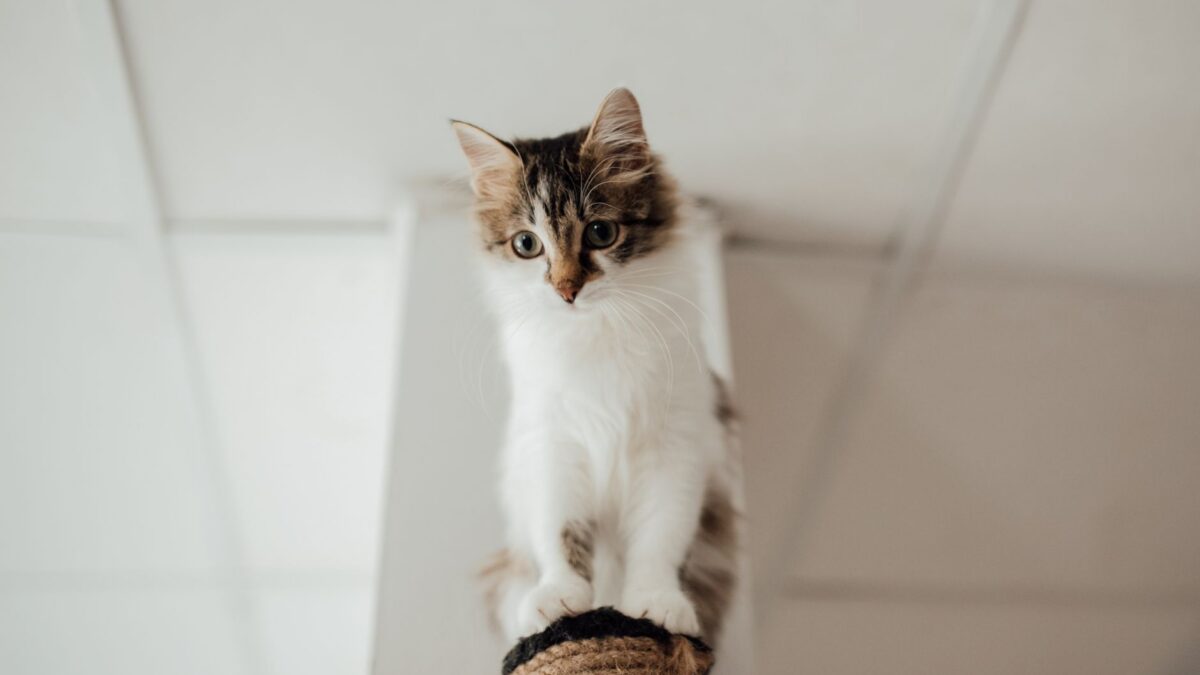
A good cat scratching post is tall enough for your cat to stretch fully upright, heavy or wide-based enough that it never wobbles, and covered in a material the claws can grip, with sisal rope or sisal fabric the usual choice. Put it where your cat already spends time or scratches, and use a second one if the cat targets the sofa.
Scratching is normal cat behavior. It stretches the muscles, removes worn outer claw sheaths and leaves both a visual mark and a scent from glands in the paws. A post gives that behavior an acceptable target, so the choice matters more than the price tag.
How tall should a scratching post be?
Tall enough that your cat can reach up and stretch its body to full length. Many cats scratch at the end of a stretch, so a short post forces them to hunch, and they usually give up on it. For an adult cat, that means a post that is at least as tall as the cat when it stands on its hind legs with its front paws reaching up. Large breeds and big adults need more height than kittens, so measure your own cat instead of trusting the label.
A short post still has a use. Kittens and seniors with stiff joints may prefer a lower surface, and a sloped or horizontal scratcher works for cats that like to scratch along the floor.
How stable does it need to be?
It must not move when the cat pulls on it. Press on the top and push it from the side. If it rocks, tips or slides on a hard floor, a cat will notice after one fall and may avoid it for good. Look for:
- a wide, heavy base, wide enough that the post stays upright when the cat leans on it;
- a post that is bolted or screwed to the base, not just glued;
- a thick post, since thin tubes bend under a cat’s weight;
- a non-slip underside, or placement on a rug that does not shift.
A heavier cat needs a sturdier build. If your cat likes to launch itself at the post, a wall-mounted model or a post that braces against a wall or door frame can be more secure than a freestanding one.
Which material works best?
Sisal rope and sisal fabric are the most common choice because the fibers are rough and durable and let claws catch and pull. Corrugated cardboard is cheap, works well for horizontal and angled scratchers, and wears out faster. Natural wood and bark appeal to some cats. Carpet-covered posts are the one to think twice about, since a cat that learns to shred carpet on its post may start on the carpet on your floor.
Check the covering for loose threads and staples. Avoid anything that sheds small pieces a cat could swallow. Rope that is wound tightly and secured at both ends lasts longer than loose wrapping.
Cats differ in what they like, so watch yours. If it scratches the arm of the sofa in a vertical position, pick a vertical post. If it scratches the rug, a flat scratcher is the better match.
Where should you put the scratching post?
Place it where your cat already scratches, or near where it sleeps, since many cats stretch and scratch right after waking. Entry points and the spots next to furniture they have been targeting also work. A post tucked into a rarely used corner tends to be ignored.
- Start next to the furniture your cat is scratching now.
- Move it a little at a time only after your cat is using it regularly.
- In a home with several cats, place one in each main living area so no cat has to cross another’s territory to reach it.
If you are also shopping for a bigger piece with perches, our guide to choosing a cat tree covers stability, height and materials for climbing furniture, and this guide to cat beds and cat houses helps with sleeping spots to place nearby.
How do you get a cat to use it?
Make the post more appealing than the furniture, rather than relying on scolding. Rub a little catnip on it or dangle a toy against it so your cat touches it with its paws. Praise or reward the cat when it scratches the post. Cover the sofa spot with a throw or double-sided tape while the habit changes, and keep nail trims regular so there is less need to scratch.
Never punish a cat for scratching and do not pull its paws across the post. Both make the cat wary of the post. If scratching becomes sudden, excessive, or comes with limping, swollen paws or chewing at the claws, call your vet to rule out a health problem. The ASPCA has more guidance on cat behavior and care.
Quick answers
How many scratching posts does a cat need?
At least one, and more if you have several cats or a large home. A post in each area where the cat spends time works better than one in a single corner.
Do kittens need a different post?
Kittens can start with a small, stable post, but they grow fast. A taller one bought early saves replacing it, provided the base is not too heavy or tall for a kitten to climb safely.
When should I replace a scratching post?
Replace it when the covering is shredded to the base, the post wobbles, or loose threads and staples show. Some posts let you re-wrap the sisal instead of buying a new one.